
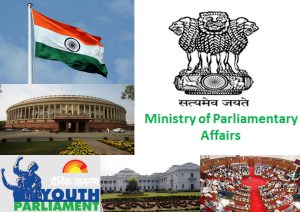
India is the ‘largest democracy’ in the world. After our independence, parliamentary democracy was established in our country on January 26, 1950, in accordance with the terms of Indian Constitution. Since then, India has emerged as a socialist, secular republic of people and a sovereign state recognized across the globe. Democracy is firmly rooted in India. India is the melting pot of a multitude of dialects, religious and castes. Despite many kinds of obstacles India has been successful to safeguard the sanctity of its constitution and maintain its high standard of Parliamentary democracy. The democratic system of governance is the only source of hope and assurance for the common masses of India.
We have a prolonged history of democracy in our country. Since very ancient Vedic times, a multitude of different opinions and ideologies, respect for others’ beliefs and religions, tolerance towards other people’s views, deference to majority opinion, and such other values, which notably constitute the fundamental components of the concept of modern democracy, have been cultivated by various transformations cutting across all ages and have become an essential part of the way of living and the system of governance of India.
There are specific parliamentary rules and regulations to be followed. It is indeed our duty to undertake the necessary endeavors for evolving the right concept regarding the parliamentary system of government among our students and to provide preliminary training to the future leaders of our country. Student life is the best time to build up one’s character, and to develop the right kind of ideology. The youth of today will lead the country tomorrow in various significant fields on nation-building and state administration.
It is, therefore, very essential to develop a complete concept regarding the parliamentary system of governance among the students from a very young age. Moreover, the Youth Parliament Competition has been planned with the aim and objective to make the students informed and aware of the national and international happenings, to develop a keenness in their analytical skill, to train them on how to construct their opinions in terms of sound logic and factual evidence, to teach them the value of discipline and tolerance, and to inspire them in a constant effort and struggle to achieve the liberal and altruistic ideal of secularism.
To familiarize the students with the Parliamentary procedures and system.
To develop an insight regarding the activities of the parliament among the students.
To assist the students in their perception of matters of public interest and form their opinions on those issues.
To train them in the technique of group behaviour and group discussion.
To train them on how to arrive at a proper decision after taking part in a group discussion.
To train the students to be patiently attentive to others’ views and to be respectful towards them as well as to develop the skill to contradict them logically if and when necessary.
To make them realize the fact that is necessary to obey the rules to make any discussion fruitful and effective.
To make the students informed and aware of the various social and national problems.
To develop the quality of leadership in the students.
To make the students perceive the common man’s views and to develop a proper opinion on the issue as well as a power of articulate expression.
Youth Parliament Competition Programme
Youth Parliament Quiz Contest Programme
Youth Parliament Quiz Contest Programme on Character Building of Students
Youth Parliament Extempore Speech Competition Programme
State Level Essay Competition Programme
Dr. Arpita Chauni
Assistant Professor & Head
Dept. of Philosophy